Martian Concrete
Someday, many people hope, humans will travel to Mars. If we are going to colonize Mars, we will need buildings to live and work in. But shipping building materials across 225 million kilometers of space—the average distance between Earth and Mars—would be a nightmare. It costs a lot of money and effort to launch a kilogram of material to low Earth orbit and many times that amount to send it to Mars, so trying to ship tons of concrete would be financially ruinous and logistically very difficult. Researchers have developed a cheap, strong concrete from “Martian” soil to solve this problem. A new kind of concrete was developed that does not require water and is more than twice as strong compared to ordinary concrete.
Once humans arrive on the red planet, they will require high-quality buildings in which they can live and work. They can take certain structures with them, but this is only a temporary solution. The first colonizers will need to quickly find a way to build structures using the planet’s own resources. But how?

Figure 1: Microscopy images showing different particle sizes - Martian concrete (left) compared to the conventional sulfur concrete (right)
This could be answered thanks to the work of materials scientist Lin Wan and her colleagues at North-Western University’s Center for Sustainable Engineering of Geological and Infrastructure Materials (SEGIM) in Evanston, US.
They have figured out how to make Martian concrete using materials that are widely available on Mars. More crucially, this concrete can be formed without using water, which will be a precious resource on the red planet [1]. When we start colonizing other planets like Mars, we are going to need concrete to make buildings and infrastructure. However, concrete needs water, and Mars does not have any. How do we make it then? A team of researchers at Northwestern thinks they have the answer: sulfur liquefies when it is heated up to 240 degrees Celsius, and then it can be used instead of water. Mix it with Martian soil, which acts as an aggregate, and then let it cool. The sulfur solidifies, binding the aggregate and creating concrete. This is the way Martian concrete is made [1].
Of course, the idea of using sulfur to bind aggregates is far from new. Engineers have been experimenting with this kind of material for at least a century and initially found that sulfur-based concrete had its fair share of problems [1]. For instance, as sulfur cools, it solidifies into monoclinic sulfur and then transforms into orthorhombic sulfur, the stable allotrope at lower temperatures. However, it also shrinks during this process, and this shrinking creates cavities and introduces stresses that severely weaken the material [1]. In addition, in the 1970s, materials scientists studied the feasibility of using sulfur concrete to build lunar bases. They discovered that in a vacuum, sulfur sublimates - it turns from a solid directly into a gas. So, any sulfur concrete on the moon would quickly disappear into the ether [1].

Figure 2: Test results for Martian concrete
An important question is whether sulfur concrete can be made strong enough and durable enough to be useful on Mars. To find out, Wan and her colleagues tried to make some Martian concrete. They used simulated Martian soil consisting mainly of silicon dioxide and aluminum oxide with other components such as iron oxide, titanium dioxide, and so on [1]. They also tested various particle sizes in this aggregate (Figure 1). The tests were straightforward (Figure 2). The aggregate was mixed with different percentages of molten sulfur, after which the material was allowed to cool into blocks. Once cooled down, the physical properties of the resulting material, such as compressive strength and failure mechanisms, could be measured. In addition, they also chemically analyzed the mixture and simulated its behavior. The results are interesting. It turns out that using an aggregate of smaller particles reduces the formation of voids, which significantly increases the strength of the material. Apparently, the best mixture for producing Martian concrete is 50 percent sulfur and 50 percent Martian soil with a maximum aggregate size of 1 millimeter [1].


Figure 3: Cube specimen (a) before and (b) after unconfined compression test
It is also a strong material, with a compressive strength exceeding 50 MPa. In particular, it is compressed during curing to reduce the formation of voids (Figure 3). This strength is also partly due to the chemical bonds sulfur forms with Martian soil. This compressive strength will be necessary on Mars, since the planet’s atmospheric pressure and temperature range so widely compared to Earth’s more hospitable conditions [2]. There are other advantages too. Martian concrete can be recycled by reheating it, which melts the sulfur. So, it can be reused repeatedly (Figure 4). It is also fast-setting, relatively easy to handle, and extremely cheap compared to materials brought from Earth [1].

Figure 4: Re-use concrete
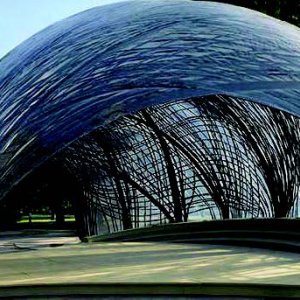
This means that the first permanent structures on Mars should be straightforward to make. All that is needed is a new generation of Martian architects to design buildings made of Martian concrete that will be suitable structures for humans to live and work in [1] (Figure 5).

Figure 5: Mars in the future
Of course, we are many years away from Martian colonies. However, the idea that generations of humans in the not-too-distant future will live, work, and play on Martian soil does not seem so far-fetched. If the Northwest team is right, we may be working with a superior version of the same material we use on Earth [3].
References
[1] Materials Scientists Make Martian Concrete. MIT Technology Review. [Online] January 5, 2016. https:// www.technologyreview.com/s/545216/materialsscientists-make-martian-concrete/.
[2] Brownlee, John. Why Martian Concrete Might Be The Best Building Material In The Solar System. Fast Company. [Online] January 7, 2016. https://www.fastcompany.com/3055172/why-martian-concretemight-be-the-best-building-material-in-the-solarsystem.
[3] Liverani, Stephanie. ‘Martian concrete’ could be key to future human colonization on Mars. The American Ceramic Society. [Online] January 8, 2016. https://eramics.org/ceramic-tech-today/martian-concretecould-be-key-to-future-human-colonization-on-mars.