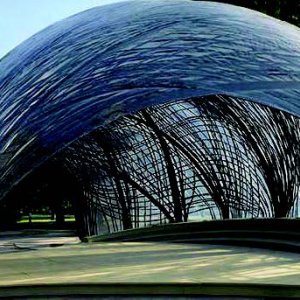
Sustainable Timber Structure in WRZV Sports
By ir. Lonneke van Haalen
Maximum circularity, sustainability, and the lowest possible environmental impact were the goals in the development of the WRZV sports halls in Zwolle. ABT worked with an integrated team together with AGS Architects on behalf of the municipality of Zwolle. The new sports halls consist of two halls with various supporting facilities. The halls are connected to create one multifunctional space. The facilities block is located in the corner of the halls with supporting amenities such as changing rooms, technical rooms, and catering.
Sustainable and circular material use
Minimizing environmental impact was a leading theme in the choice of construction materials. ABT designed an elegant timber load-bearing structure to keep the CO2 footprint of the construction as small as possible. Based on a variant study, this was found to be the option with the lowest environmental impact, see Figure 1. The impact is just one-third of a traditional steel structure. The timber structure contributes to a pleasant experience in the building and is designed to be demountable. The timber used comes from sustainably managed forests. The concrete sports hall floor is responsible for a significant amount of the used materials. The use of cement screed was avoided by finishing the concrete floor monolithically. This resulted in a significant reduction in environmental impact. Much attention was paid to optimizing the concrete mixture of the concrete floor. In the finishing, many reused materials were applied, such as cable trays from an old printing company, used sinks, an air handling unit from another project, leftover sandwich panels in various colors, finishes in places where they remain out of sight, and entrance mats made from recycled rubber tires.

Figure 1: Comparison of the environmental impact of structural options for the roof structure
Sustainable timber structure
The structure of the sports halls is made of laminated timber trusses with laminated timber columns. These trusses span 31 meters in the large hall and 27 meters in the small hall. The diagonals in the timber trusses of the halls are made of tension rods, resulting in an elegant load-bearing structure with a warm and slender appearance, see Figure 2. Near the end walls of the hall, some trusses contain double tension rods that bear the upward wind loads. The trusses were fully assembled in the factory and transported to the construction site as a whole. The two halls are connected by a large truss, also made of laminated timber construction. This creates one large space. The roof is made of steel roof plates.

Figure 2: Principle details of timber trusses
The facilities block consists of two floors with a technical room and installations on the roof. Hollow core slabs with load-bearing sandstone walls are used on the ground floor, where the changing rooms are located. The first floor, with the cantilevered tribune, is made of a wide slab floor. The roof of the facilities block consists of a steel structure. The sports hall, like the facilities block, is founded on piles.
An expansion joint is made between the sports hall and the facilities block. Both building parts are in a different fire compartment. To prevent interaction between these building parts, even in the case of a fire, the columns along the expansion joint are built in pairs. A 3D-Revit model building structure can be seen in Figure 3.

Figure 3: 3D-revit model building structure
Net-zero energy and energy-producing
Sustainability is also an important theme in the field of energy. The building is designed to be net-zero by generating energy as efficiently as possible and recovering it where possible. Energy use is minimized by applying heat pumps, recovering heat from shower water, and using smart LED lighting. The roof is covered with PV panels. The layout of the panels was optimized using simulation software, making the roof surface as efficient as possible and turning the sports hall into an energy-producing building. Would you like to contribute to such exceptional and innovative projects? Contact the author Lonneke van Haalen or email bouwenaanambities@abt.eu.